

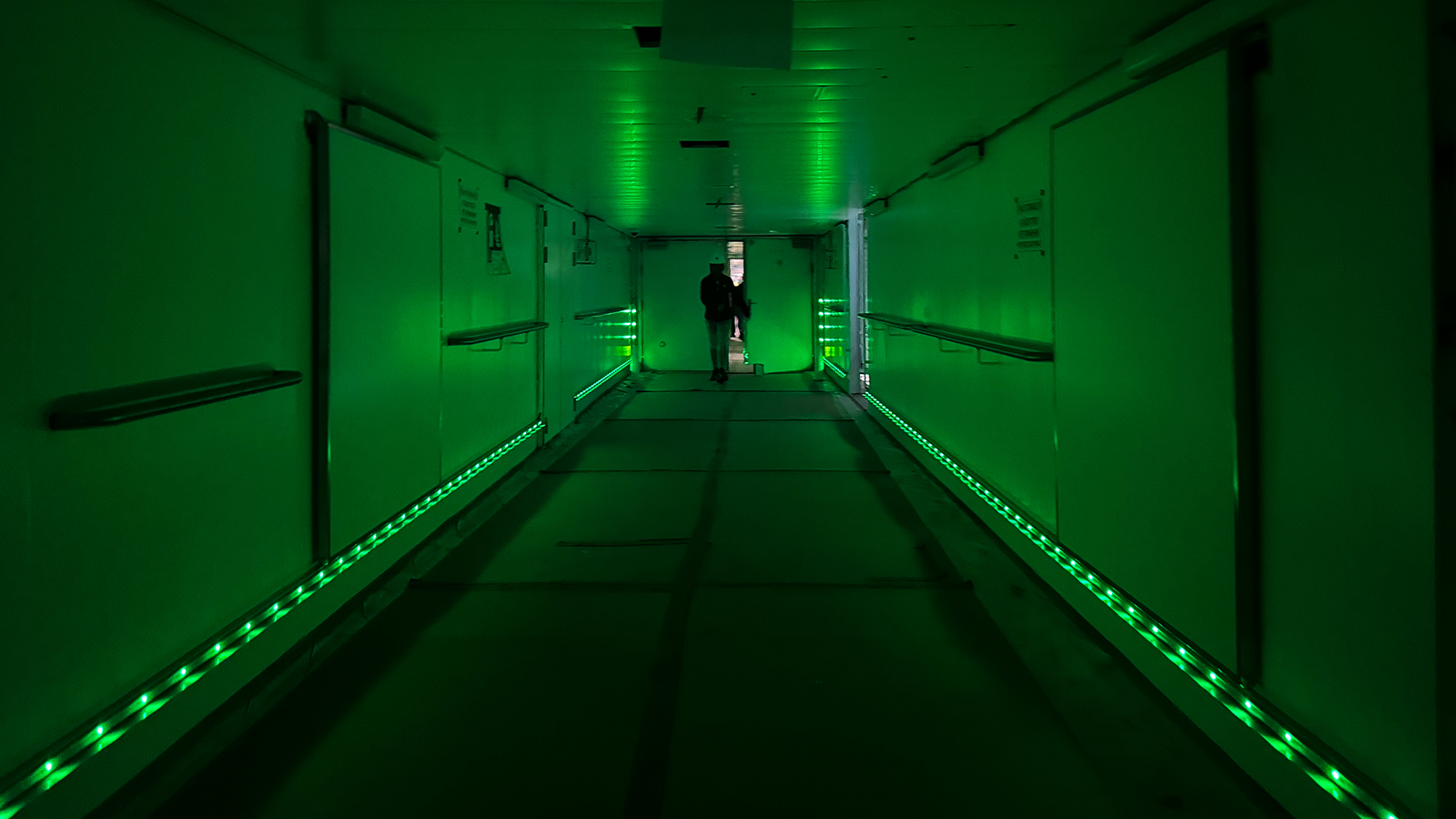
What is Electrical Low Location Lighting?
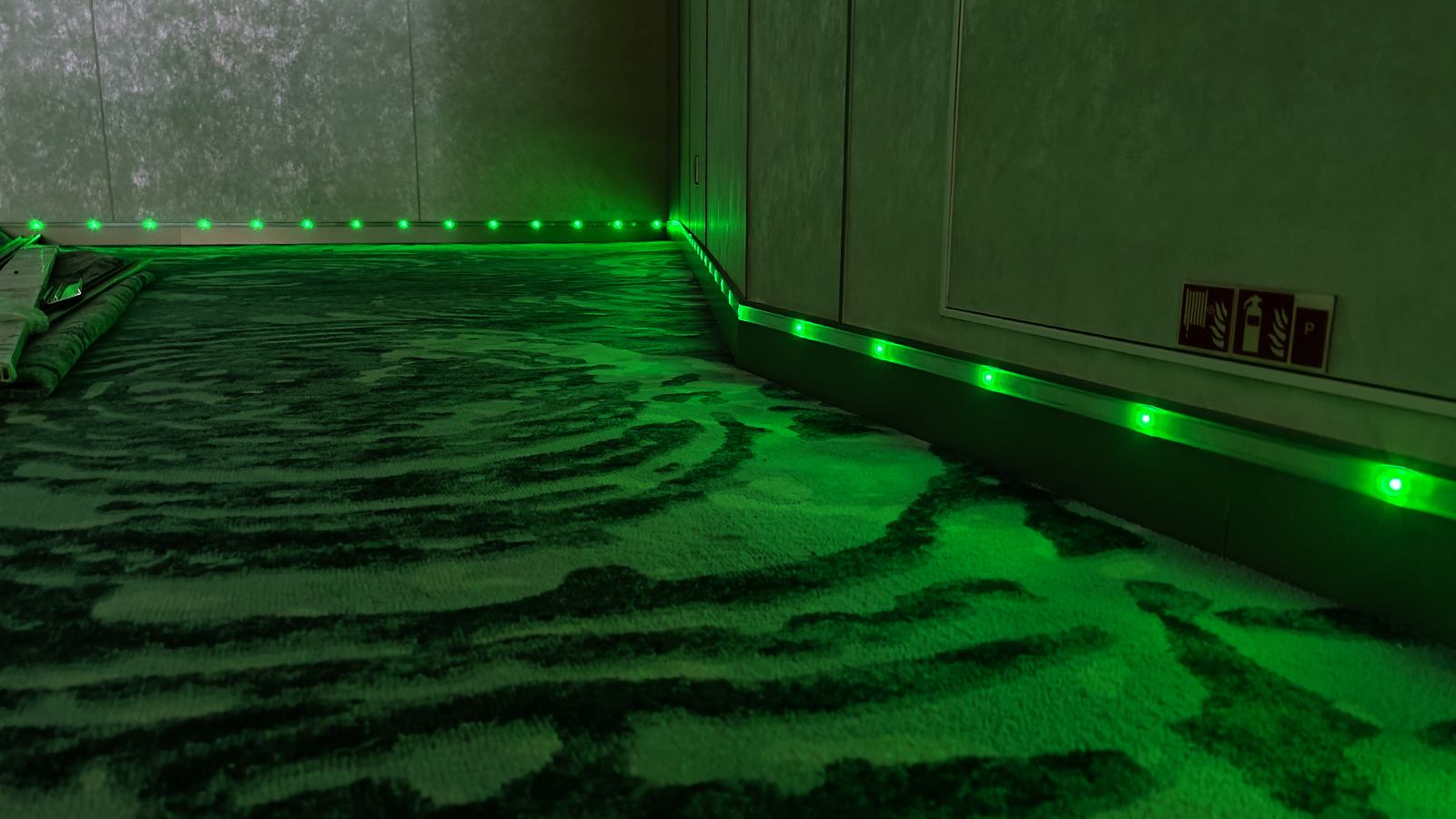
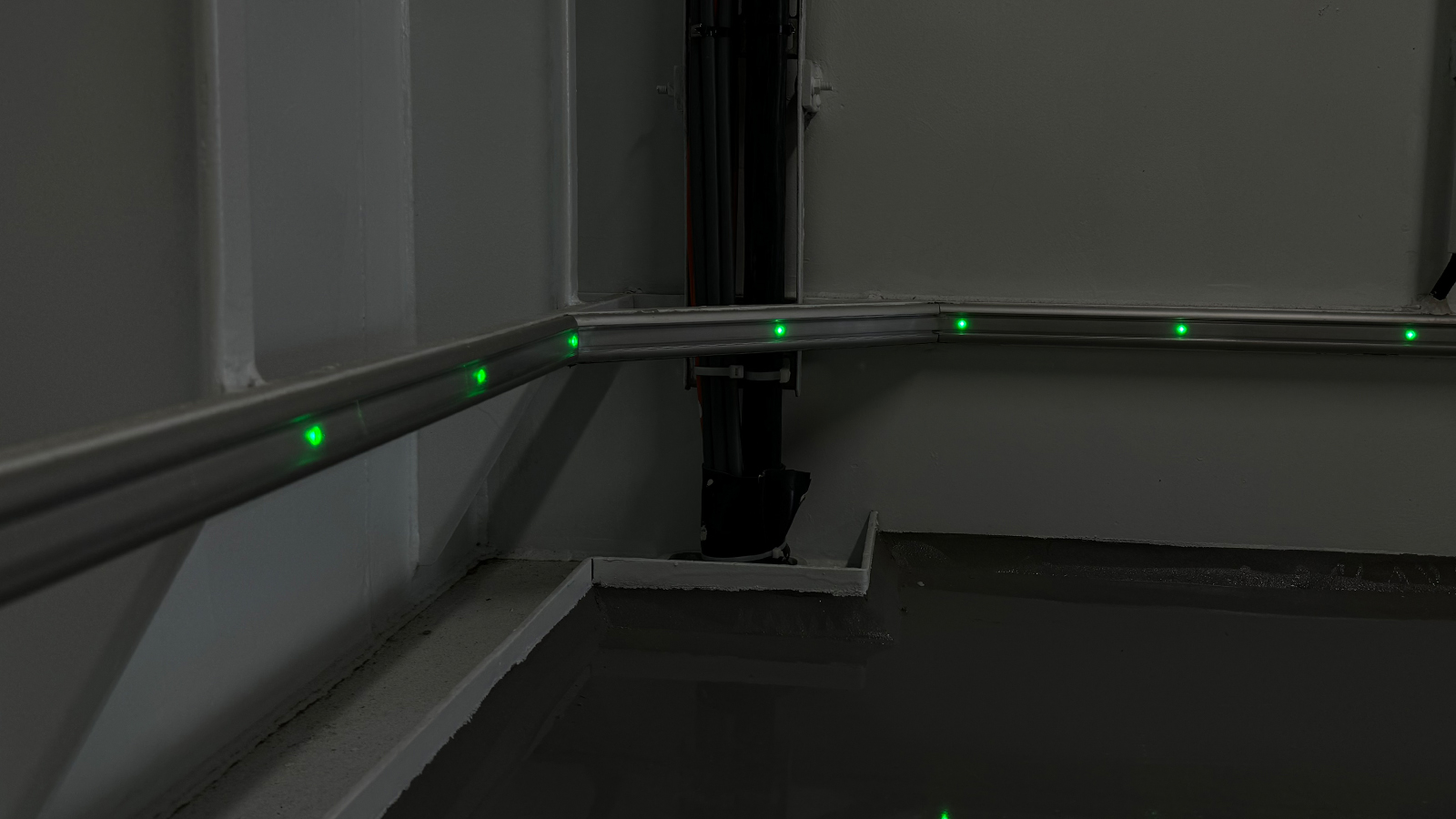
Electrical Low Location Lighting is an active Safety Lighting System used in the maritime industry to guide people during emergencies. Installed near the floor—either wall-mounted or floor-mounted—these LED strip systems are designed to remain visible even in low-visibility conditions such as smoke, darkness, or power failure.
Unlike passive Low Location Lighting systems that rely on photoluminescent materials to glow after absorbing ambient light, electrical LLL systems are powered by electricity. This ensures constant and high-brightness illumination, regardless of external lighting conditions. The LED strips typically feature “true green” high-intensity LEDs (minimum 540 mcd) spaced every 200 mm for consistent visibility. Their flexible design allows installation even around 90° corners or tight curves, without electrical interruption.
Why is Low Location Lighting Important?
In emergency situations—particularly fires—smoke can quickly rise and obscure ceiling lights. Electrical Low Location Lighting offers clear, bright guidance along escape routes at floor level, where visibility is usually better. This improves orientation, reduces panic, and helps people evacuate safely.
Because this system is electrically powered, it performs reliably regardless of the environment’s light conditions. The LED strips have an exceptionally long lifespan of over 150,000 hours and operate in temperatures ranging from -15°C to +55°C. Their IP67 rating ensures they are both dust-tight and waterproof, making them highly suitable for harsh marine environments.
By providing consistent, easy-to-follow visual cues, Electrical LLL enhances onboard safety and supports compliance with maritime safety regulations.
Approvals & Certificates
Our Electrical Low Location Lighting systems meet international standards and have been certified for maritime use. They comply with environmental and performance requirements as defined in the latest editions of:
- IEC 598-2-22 – Emergency lighting standards
- Regulation for the Performance of Type Tests for Electric Appliance Components
- DNV – Type Approval for Instrumentation and Automation Equipment
- Lloyd’s Register (LR) – Type Approval System
These certifications ensure the systems perform reliably under the demanding conditions found on ships, offshore platforms, and other maritime environments.